
Normal session
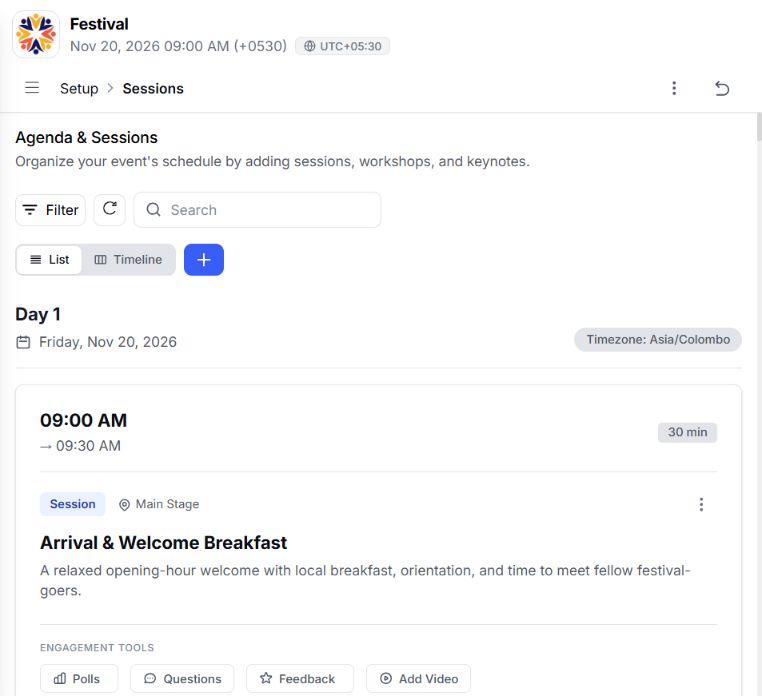
Set title, type, track, stage, timing, speakers, and access. Talks, panels, workshops
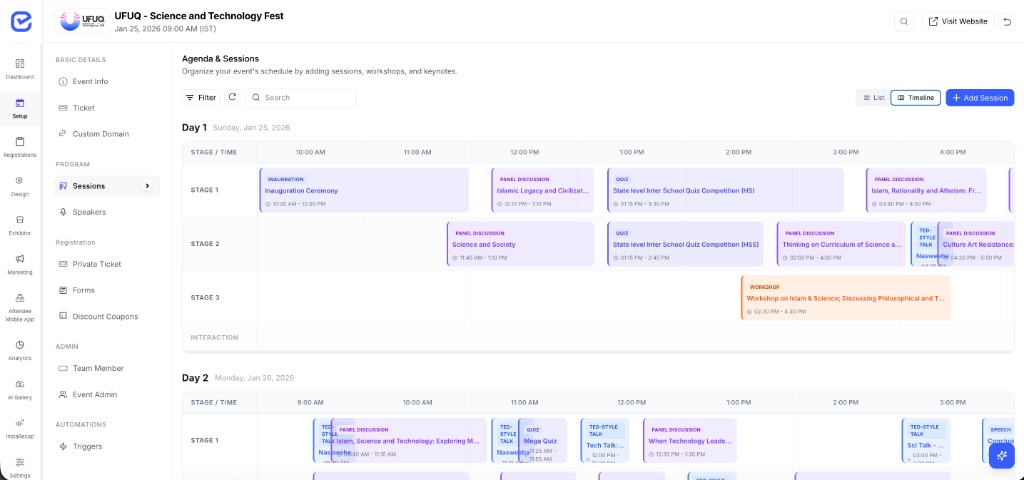
Plan sessions across days and stages, connect speakers and access rules, and publish a clear attendee agenda—without splitting the programme across disconnected tools.
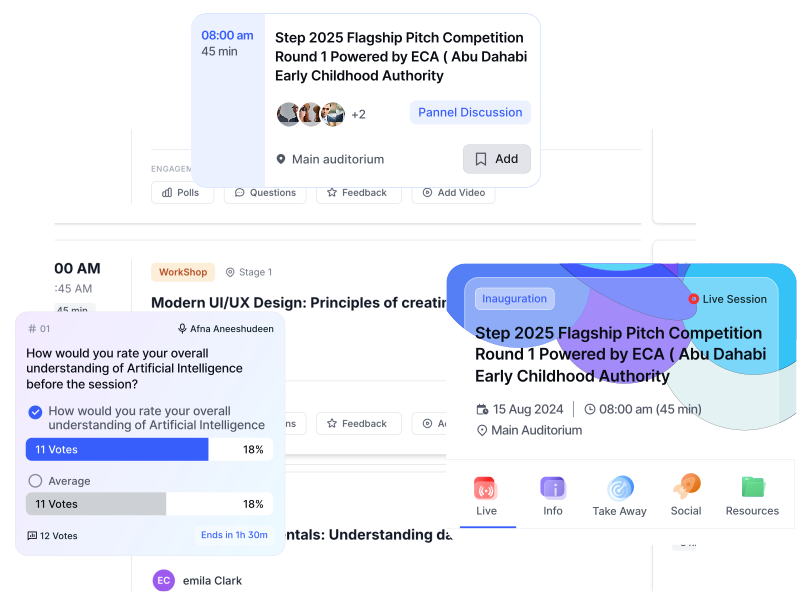
Use a standard session for scheduled content, a break for programme gaps, or a nested sub-session when one block branches into smaller experiences.
Set title, type, track, stage, timing, speakers, and access. Talks, panels, workshops
Reserve non-content time in the same agenda. Lunch, networking, transitions
Nest a breakout or parallel activity under its parent session. Breakouts and grouped programmes
Switch between agenda and timeline views, filter the programme, and reschedule a session from the timeline when the run-of-show moves.
See it in a demo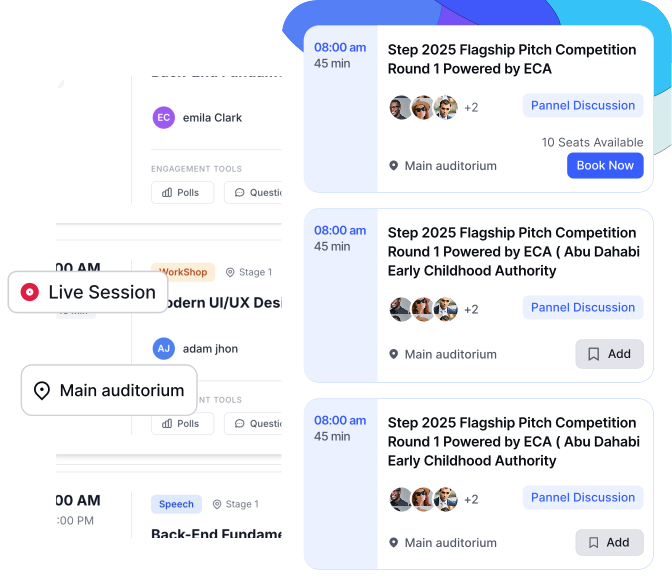
Keep stages, session types, tracks, start and end times, descriptions, and parent relationships on the agenda record instead of encoding the programme in titles alone.
See it in a demo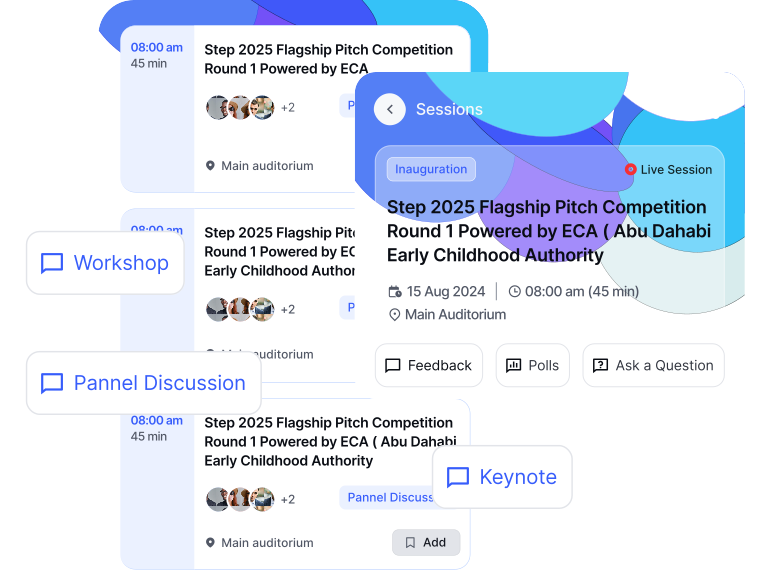
Select speakers from the event, assign a role for this session, preserve their order, and continue to Speaker Management for profiles, collection, and broader coordination.
Explore Speaker Management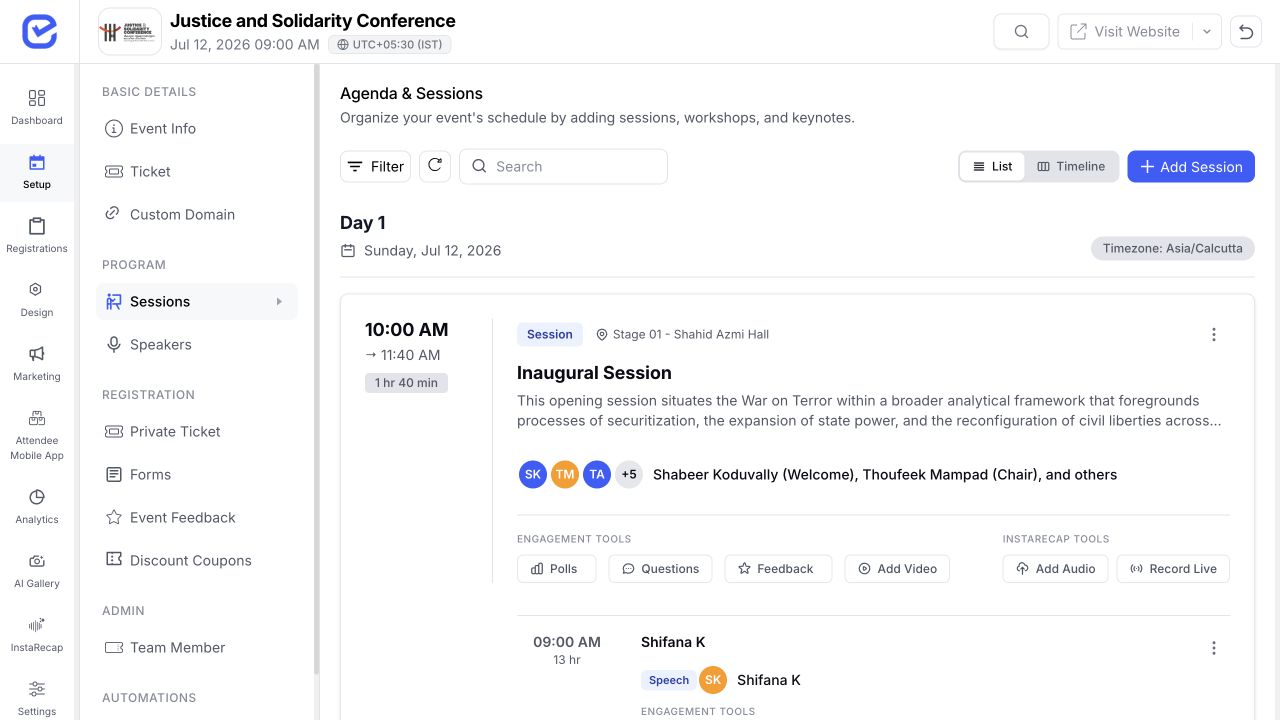
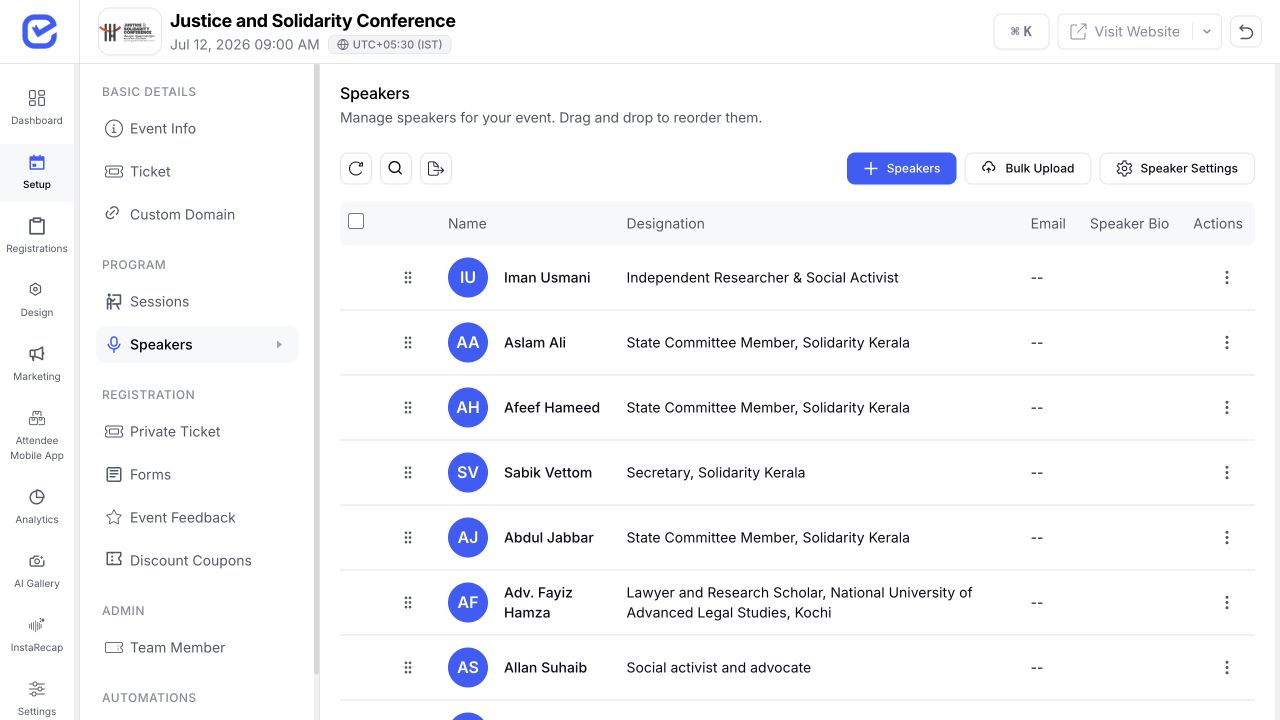
Publish the same session structure into the event app so attendees can browse the programme and return to saved sessions.
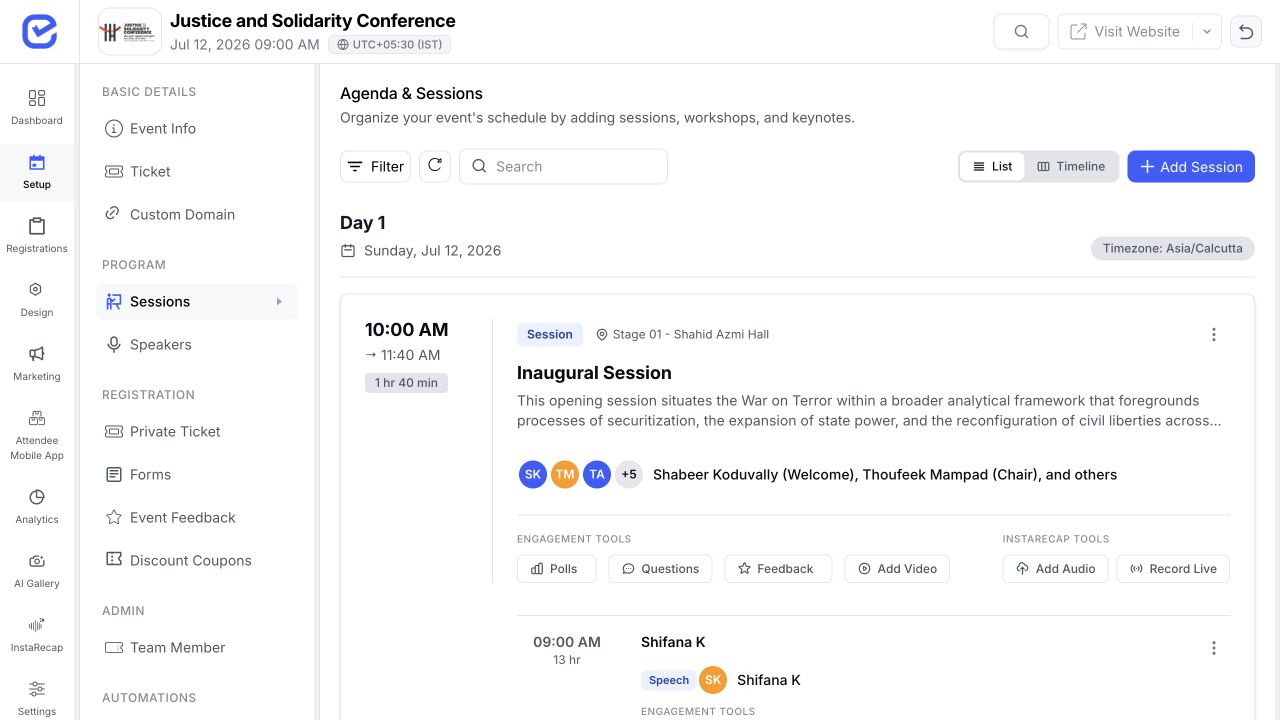
Keep each day’s sessions in the same agenda structure used by the organizer workspace.
Let attendees narrow a busy multi-track programme without losing the wider schedule.
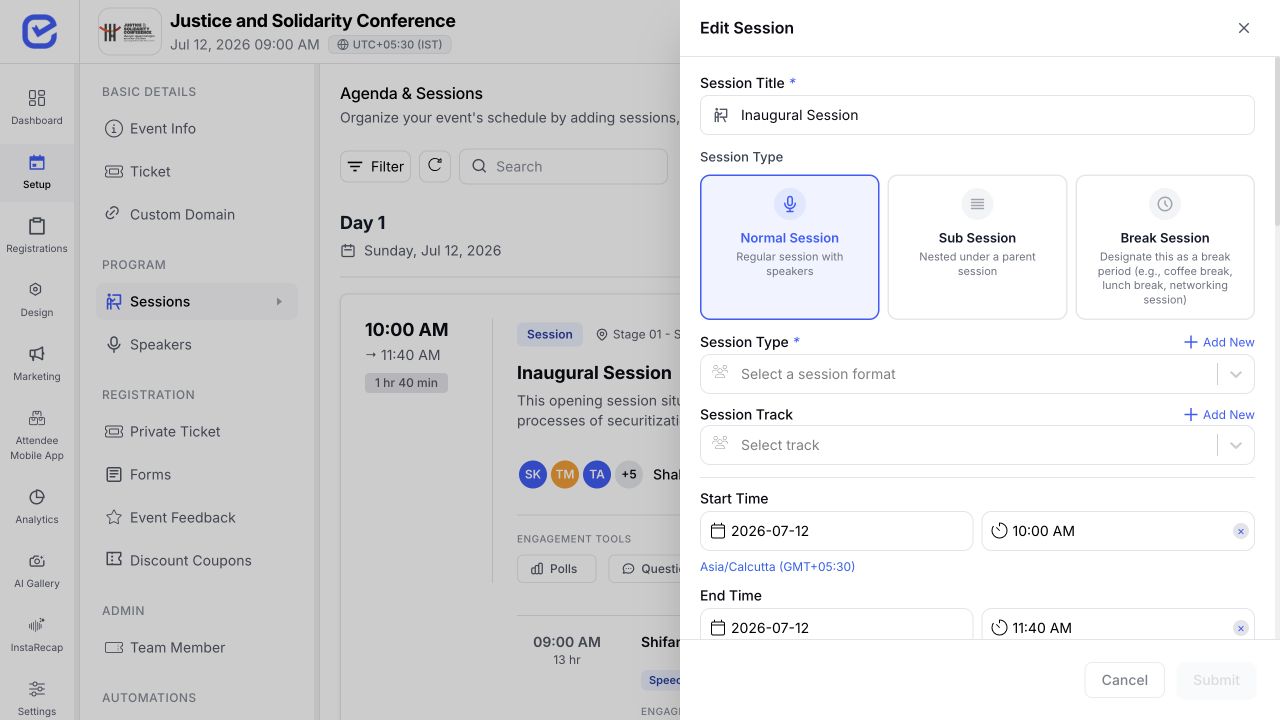
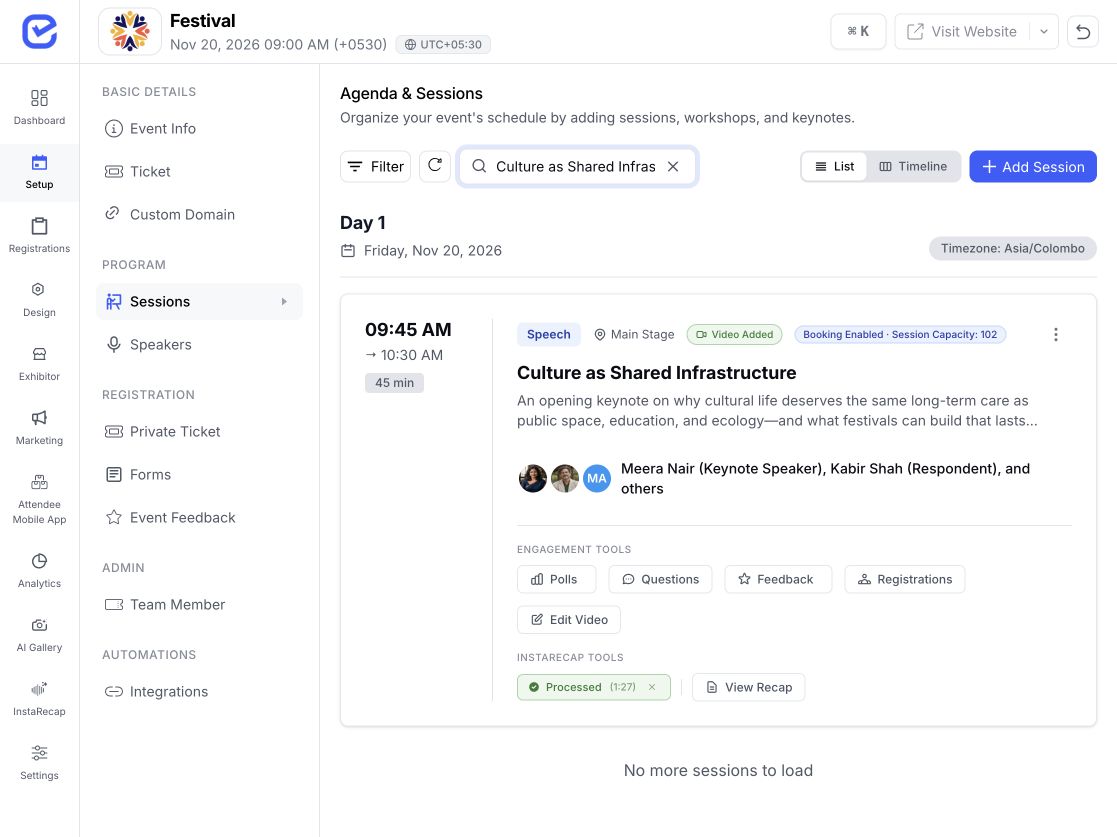
The session record carries the context attendees need when they move from the agenda into a specific talk or workshop.
Attendees can get back to the sessions they selected without rebuilding their plan from the full programme.
Apply session capacity and ticket access where required, then use event-level booking rules to control how attendees build their schedule.
Turn on a session limit and set the available capacity.
Choose which event ticket types can access the session.
Set the maximum number of sessions an attendee can book.
Block overlapping session bookings when that event rule is enabled.
Allow cancellations and define the cutoff before a session starts.
The session remains the shared context; specialist workflows handle speaker operations, live participation, notifications, and post-session content.
Collect profiles and coordinate the wider speaker workflow.
 Speaker Management
 Run live questions, polls, and feedback around the session.
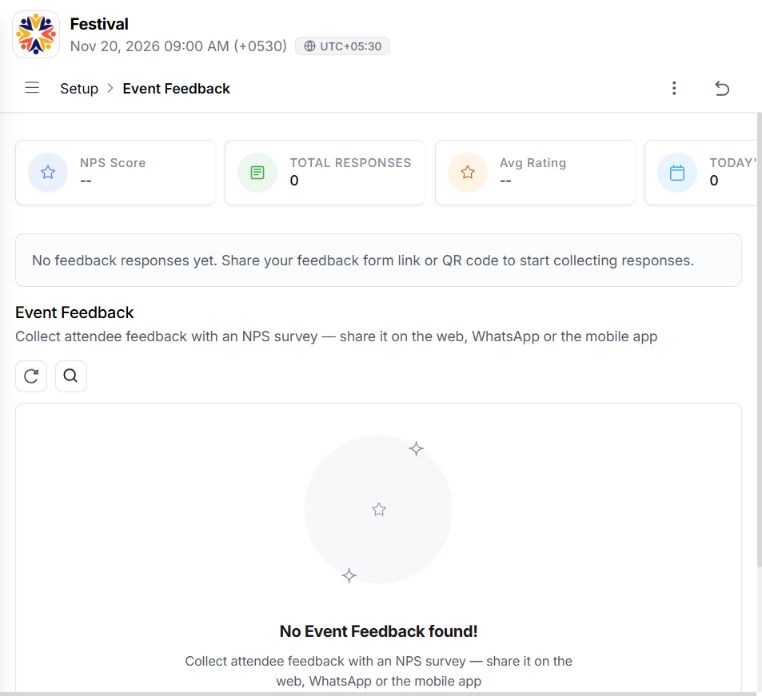 Live Polling & Q&A
 Send event and session updates through the configured channels.
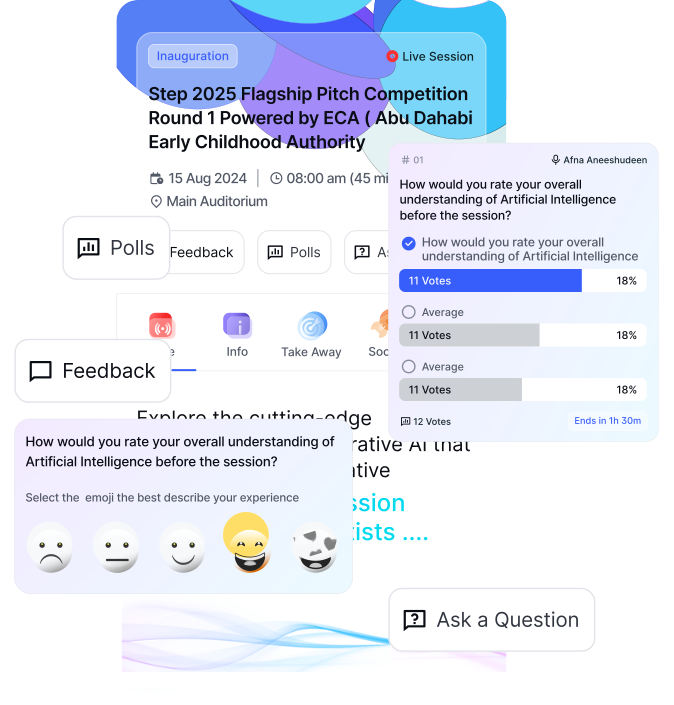 Event Notifications
 Turn supported session media into an attendee-facing recap experience.
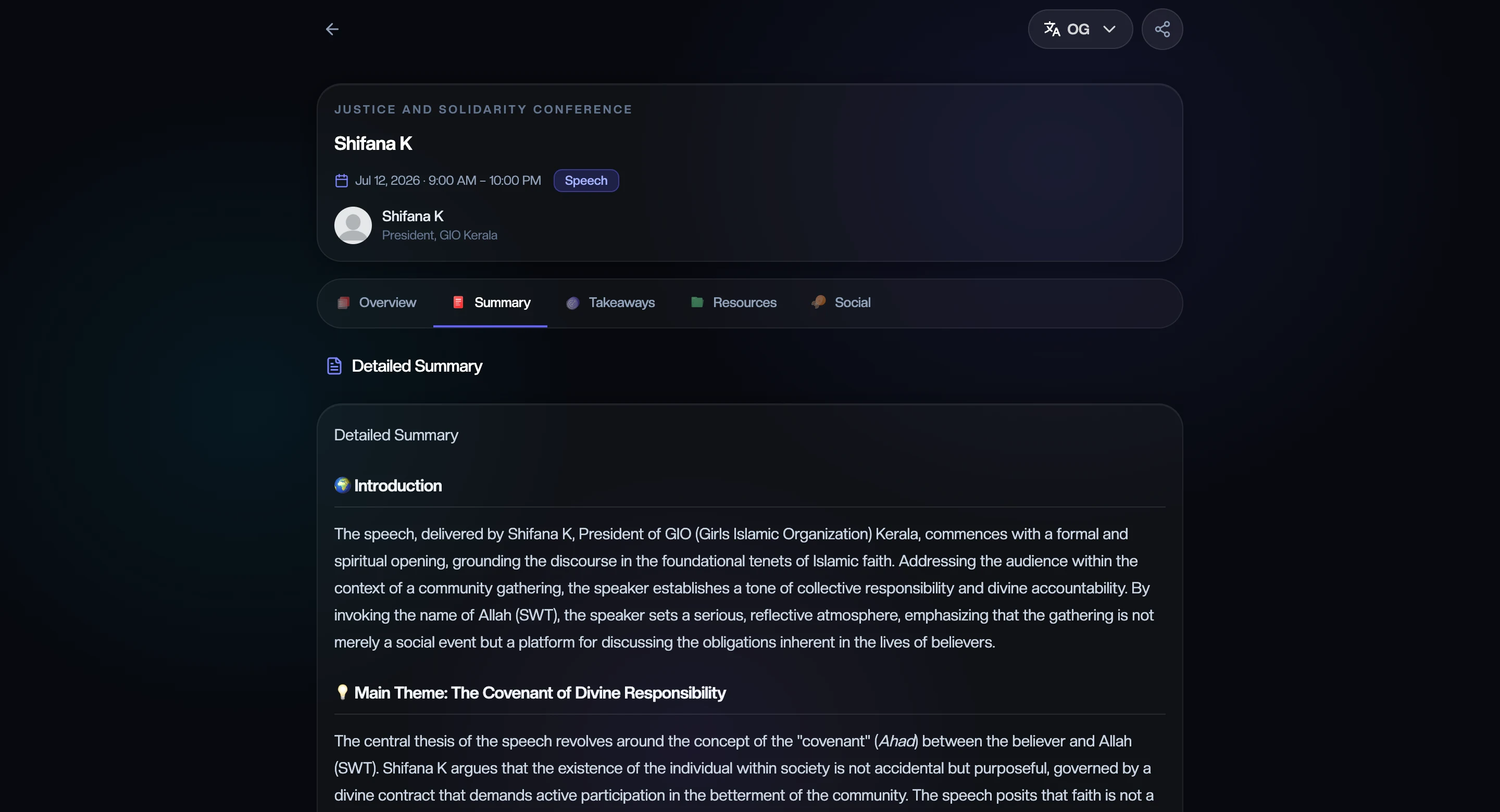 AI Session Recap
 Shape the schedule around the programme—not around a rigid page template.
Coordinate multi-track talks, panels, and breakouts.
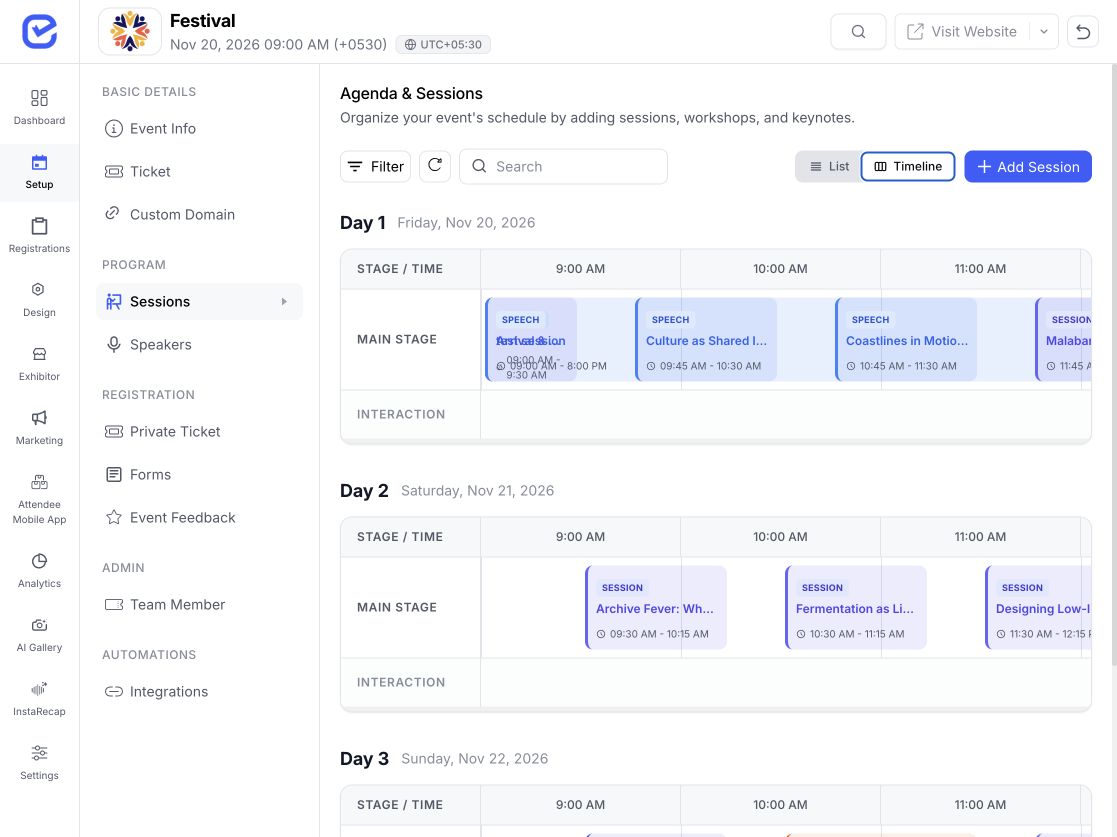
Run member programmes across days and stages.
Connect content stages to the wider exhibition schedule.
Plan leadership, training, and internal programme blocks.
Organize product, developer, and partner tracks.
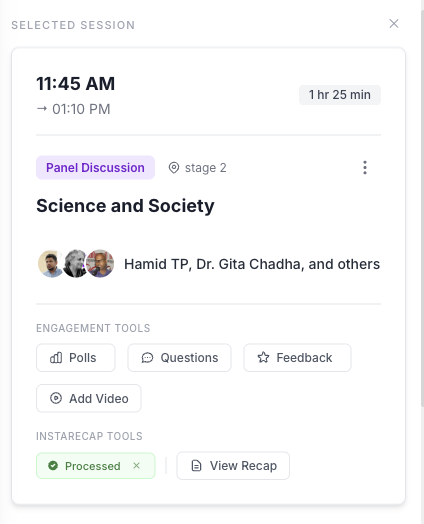
Keep session timing and speakers connected to the recap workflow.
Update the session record that drives the programme rather than correcting separate copies in multiple tools.
Reschedule from the timeline.
Update where the session belongs.
Keep attendee filtering useful.
Adjust speakers and their session roles.
Recheck capacity and ticket eligibility.
Yes. Sessions can be organized by date and stage, categorized with types and tracks, and reviewed in agenda or timeline views.
Yes. A sub-session can be attached to a parent session. The session form also supports normal sessions and breaks as separate modes.
The organizer timeline supports dragging a session to a new time. Review downstream attendee communication whenever a published schedule changes.
The session record supports ticket selection and an optional attendance limit. Confirm the intended ticket and capacity setup during the demo.
An event booking rule can prevent time conflicts. Organizers can also set a booking cap and cancellation policy; these controls should be configured for the event.
They are connected session workflows, but each has its own feature page and setup. Session Management owns the agenda and session record that those workflows use.