
Introduction
In the rapidly evolving world of events, event management technology is no longer a mere support tool; it has become the backbone of planning, execution, and measurement. From small corporate meetings to massive global conferences, organizers increasingly rely on digital solutions to streamline workflows, enhance attendee experiences, and make data-driven decisions. What once required dozens of spreadsheets, endless email chains, and countless phone calls can now be automated, centralized, and simplified through advanced event management technology platforms like EventHex, which bring planning, coordination, and insights into a single, intuitive system.
As events grow in scale and complexity, relying on outdated methods is no longer sustainable. Modern organizers must deliver seamless experiences while managing timelines, budgets, and expectations. This is where event management technology plays a critical role, enabling teams to operate efficiently and deliver high-impact events.
The Complexity of Modern Event Planning
Event planning may look glamorous on the surface, but behind every successful event lies meticulous organization. Coordinating multiple stakeholders, speakers, vendors, sponsors, attendees, and internal teams requires precision and foresight. Without the right event management technology, traditional approaches are prone to errors such as miscommunication, missed deadlines, duplicate tasks, and last-minute confusion.
Organizers must juggle venue logistics, speaker schedules, marketing campaigns, ticketing, and attendee communication all at once. For example, securing speakers involves contract management, schedule coordination, content approvals, and travel arrangements. At the same time, marketing teams must ensure consistent messaging across email, social media, and event apps. Without centralized event management technology, these tasks often operate in silos, increasing the risk of mistakes.
Modern events demand agility, real-time updates, and seamless collaboration requirements that manual processes struggle to meet.
Centralizing Operations with Event Platforms
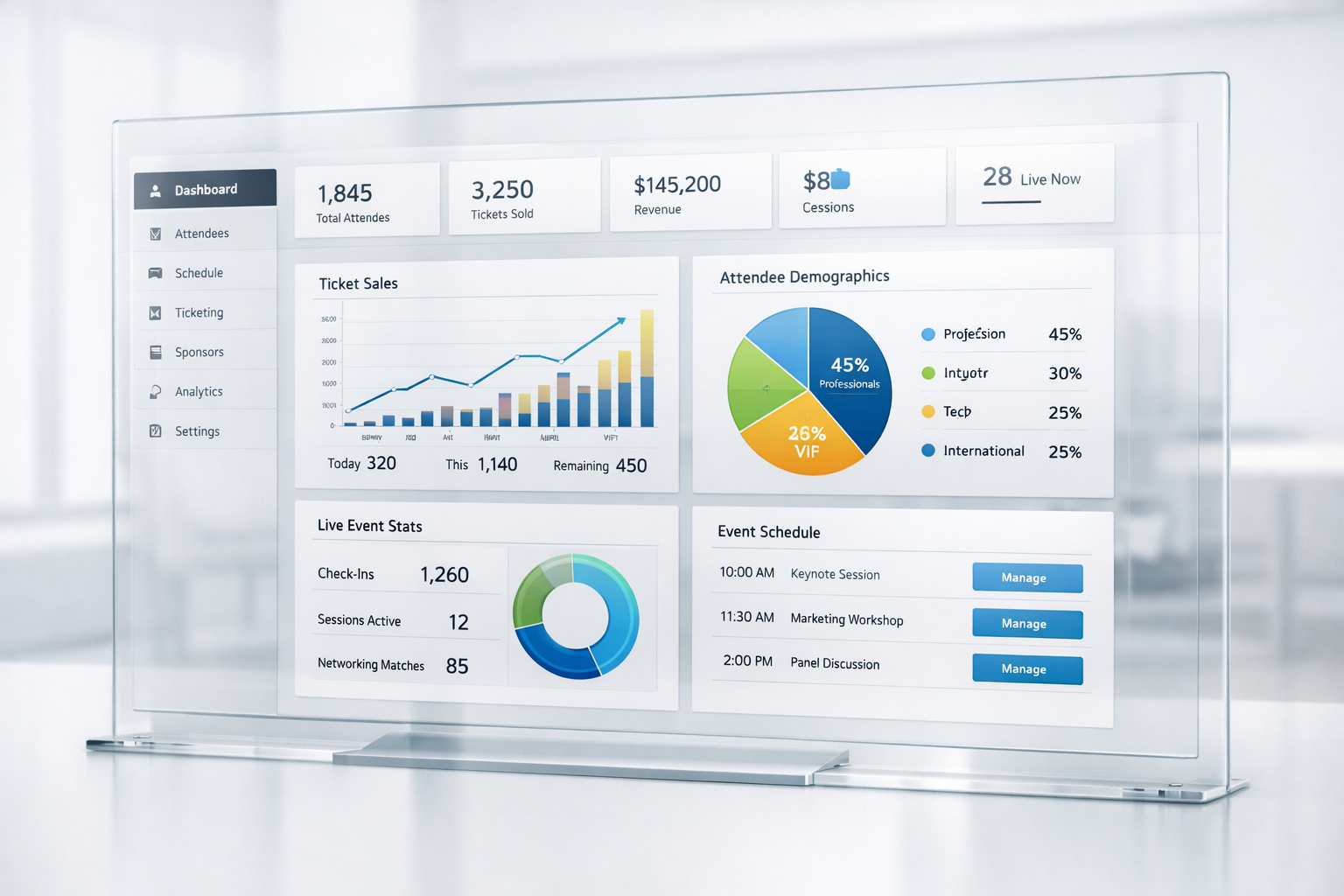
One of the biggest advantages of event management technology is centralization. Modern event platforms serve as a single source of truth, enabling organizers to manage every aspect of an event from a single dashboard.
Key functional areas include:
Attendee Management: Registration, ticketing, check-ins, badge printing, and personalized communications are handled digitally, reducing manual work and errors.
Speaker and Session Management: Scheduling, content uploads, approvals, and live or virtual session coordination are streamlined through integrated tools.
Sponsorship and Exhibitor Management: Contracts, booth allocations, branding assets, and lead tracking are managed in one place.
Marketing and Engagement: Email campaigns, push notifications, reminders, and audience segmentation are powered by automation.
Analytics and Reporting: Real-time insights into attendance, engagement, and performance allow teams to measure success accurately.
By consolidating these processes, event management technology reduces operational friction, enhances visibility, and enables teams to focus on strategy rather than administration.
Enhancing Attendee Experience
Attendee experience has become a key differentiator in today’s competitive event landscape. Event management technology enables organizers to move beyond one-size-fits-all experiences and deliver personalized, engaging journeys.
Modern tools offer:
Personalized Agendas: Attendees can build schedules based on interests, roles, or goals, ensuring relevance and value.
Mobile Event Apps: Features such as live polling, Q&A, session feedback, and gamification increase interaction and engagement.
Hybrid and Virtual Access: With high-quality streaming, virtual networking rooms, and interactive sessions, event management technology ensures remote attendees feel just as involved.
Real-Time Notifications: Instant updates about schedule changes, room shifts, or networking opportunities keep attendees informed and stress-free.
These capabilities transform attendees from passive participants into active contributors, significantly improving satisfaction and retention.
AI and Automation in Event Management
Artificial Intelligence has elevated event management technology to a new level. AI-driven features reduce manual workload, improve accuracy, and deliver smarter experiences for both organizers and attendees.
Key AI applications include:
Automated Communication: Chatbots and intelligent email systems handle FAQs, reminders, and onboarding messages.
Predictive Analytics: AI can forecast attendance patterns, engagement levels, and potential drop-off points.
Personalized Recommendations: Attendees receive session, speaker, and networking suggestions based on their behavior and preferences.
Smart Scheduling: AI optimizes session timings, room allocations, and resource usage to avoid conflicts.
By incorporating AI, event management technology enables organizers to work proactively rather than reactively, improving outcomes and efficiency.

The Role of Data in Decision-Making
Data has become one of the most valuable assets in modern events. Advanced event management technology platforms collect and analyze data across every touchpoint, from registrations to post-event feedback.
With real-time analytics, organizers can:
-
Identify which marketing channels drive the highest conversions
-
Monitor live attendance and engagement trends
-
Measure session popularity and content performance
-
Provide sponsors with accurate ROI reports
Instead of relying on assumptions, event management technology empowers teams to make informed decisions that improve both current and future events.
Improving Collaboration Across Teams
Events require close collaboration between marketing, operations, finance, content, and technology teams. Historically, coordination relied on emails, spreadsheets, and meetings, often leading to delays and misalignment.
Modern event management technology platforms offer collaborative environments where teams can:
-
Track tasks and deadlines in real time
-
Share documents, session details, and updates
-
Assign responsibilities with accountability
-
Communicate within a centralized system
This transparency ensures smoother workflows, faster decision-making, and fewer last-minute surprises.
Sponsor and Exhibitor Engagement
Sponsors and exhibitors are essential stakeholders, and event management technology helps organizers deliver measurable value to them.
Modern platforms allow sponsors to:
-
Access real-time dashboards showing leads and engagement
-
Track booth traffic and attendee interactions
-
Participate in digital sponsorship opportunities such as branded sessions and virtual booths
With clear data and insights, sponsors gain confidence in their investment, strengthening long-term partnerships.
Security and Compliance
As reliance on event management technology grows, data security and compliance become critical. Event platforms must protect sensitive information such as personal data, payment details, and proprietary content.
Secure systems provide:
-
Encrypted registrations and payment processing
-
Role-based access controls
-
Compliance with data protection regulations
-
Audit trails for transparency and accountability
Trust is fundamental to the success of events, and robust security ensures that all stakeholders feel confident in participating.
The Future of Event Technology
The future of event management technology is driven by innovation and evolving expectations. Emerging trends include:
Virtual and Augmented Reality: Immersive experiences for remote attendees
Blockchain Ticketing: Secure, transparent ticket transactions
AI-Powered Networking: Smart matchmaking based on interests and goals
Sustainability Tools: Digital solutions to reduce waste and track environmental impact
Organizers who embrace these advancements will stay competitive and deliver next-generation event experiences.
Conclusion
Event management technology has fundamentally transformed how events are planned, executed, and evaluated. By centralizing operations, enhancing attendee experiences, leveraging AI, enabling data-driven decisions, and improving collaboration, modern platforms empower organizers to deliver seamless and memorable events.
As the event landscape continues to evolve, adopting event management technology is no longer optional; it is essential. Organizers who invest in smart, scalable solutions today will be the ones shaping the future of events tomorrow.