In today’s fast-moving event ecosystem, complexity is no longer optional. Events now involve hybrid audiences, multi-track sessions, multiple stakeholder groups, real-time analytics, automated registrations, ticketing tiers, networking layers, sponsorship visibility, and post-event reporting. What used to be managed with spreadsheets and scattered tools now demands intelligence, speed, and clarity.
This is where the centralized dashboard in EventHex becomes more than just a feature. It becomes the operational backbone of the entire event lifecycle.
Rather than forcing organizers to navigate disconnected systems, EventHex consolidates control into one structured, intelligent interface. The result is not just efficiency. It is strategic visibility.
The Problem With Fragmented Event Management
Before understanding the strength of a centralized dashboard, it helps to recognize the problem it solves.
Most event teams operate with:
-
One tool for registrations
-
Another for ticketing
-
A separate CRM or spreadsheet for attendee data
-
Manual reporting systems
-
Email marketing platforms
-
Communication apps for internal coordination
This fragmentation creates friction. Data becomes inconsistent. Teams lose time switching between platforms. Reporting becomes reactive instead of proactive. Decision-making slows down because insights are scattered.
In high-pressure event environments, even small inefficiencies compound quickly.
The centralized dashboard in EventHex eliminates this fragmentation by creating a unified control center where every operational layer connects.
One Interface, Total Oversight
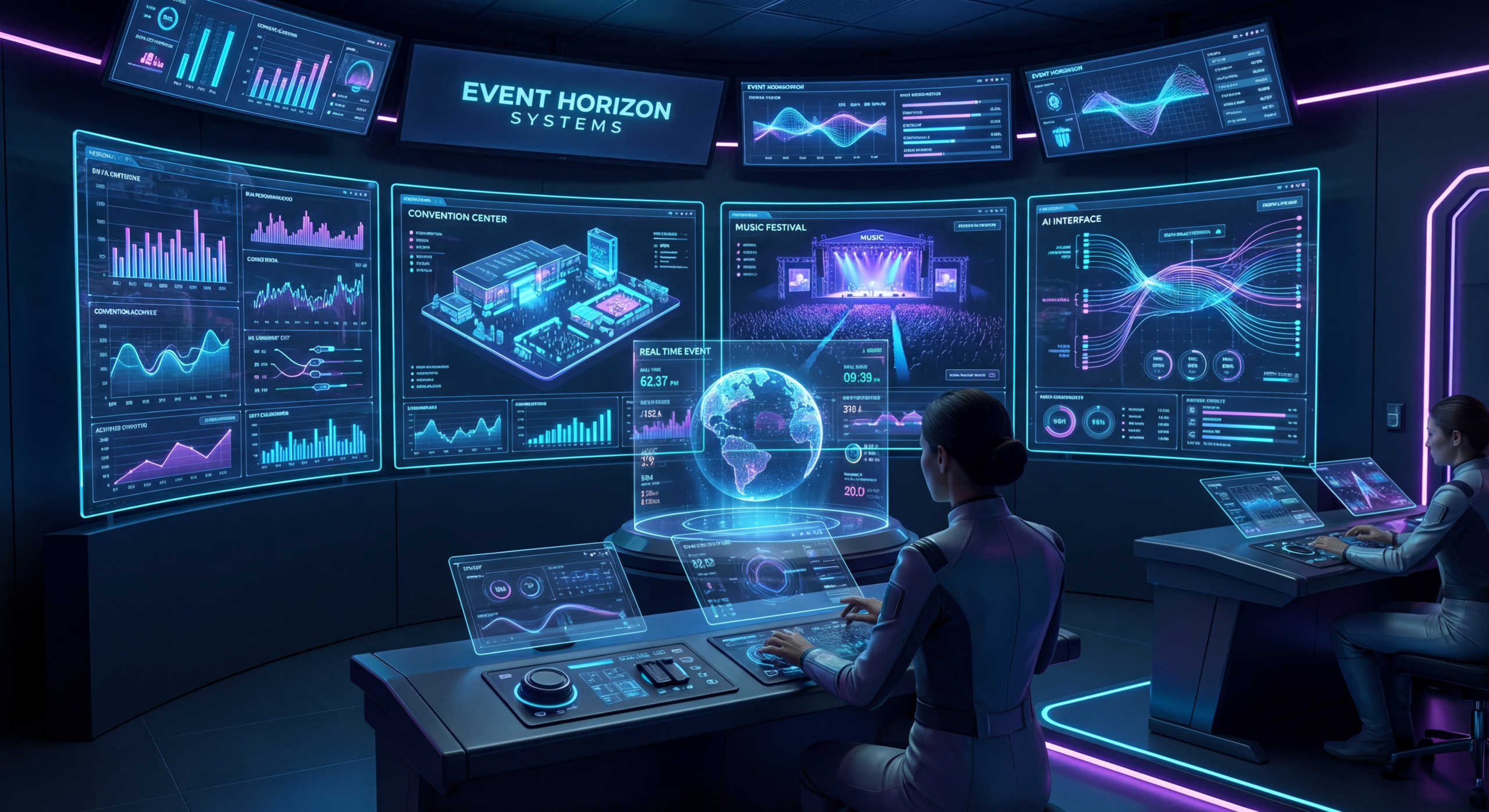
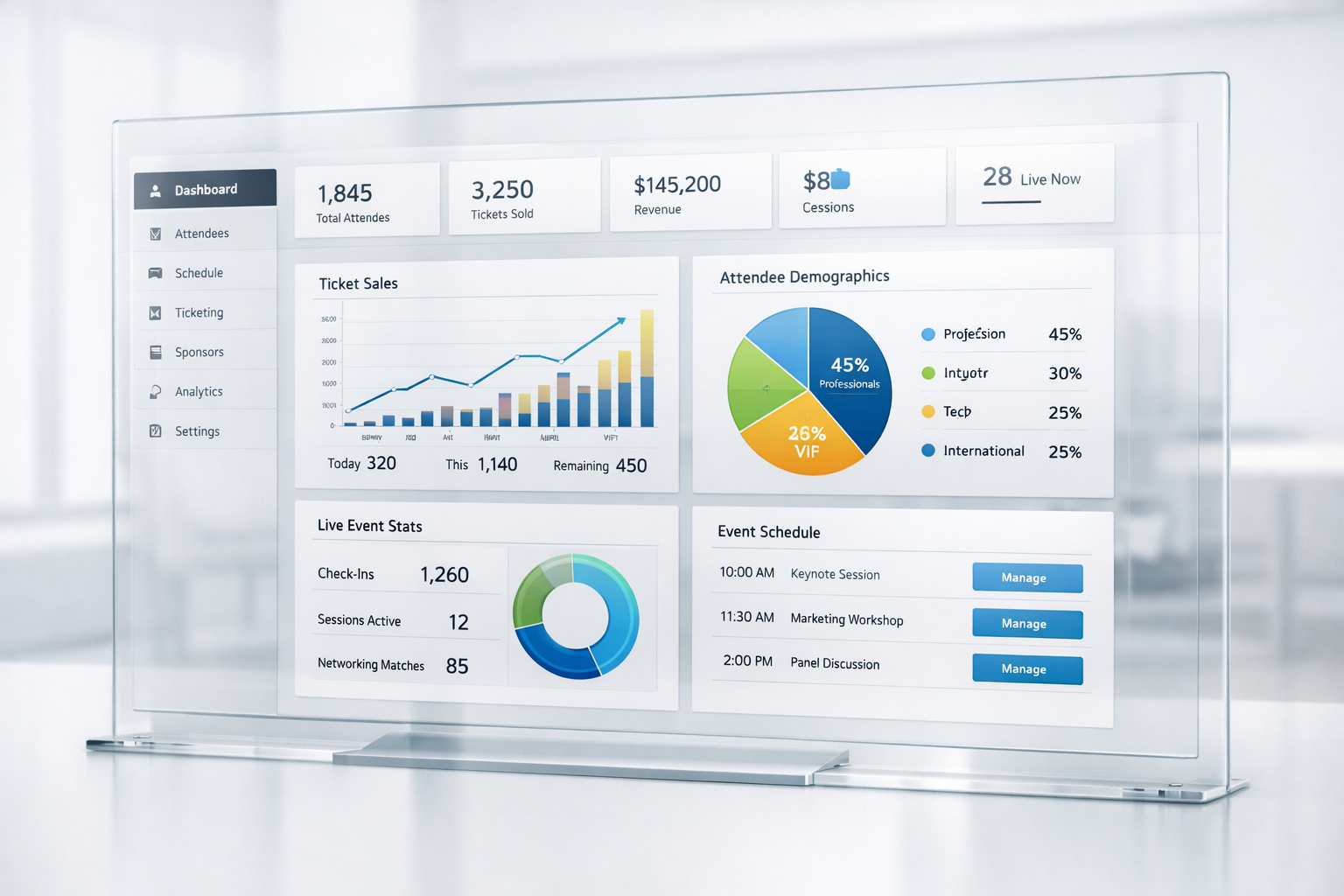
The most powerful aspect of the centralized dashboard is clarity. Instead of navigating through multiple dashboards, organizers operate from a single visual hub.
From this unified space, teams can:
-
Monitor registration performance in real time
-
Track ticket sales and revenue flow
-
Manage speakers and session structures
-
Review attendee data instantly
-
Analyze engagement metrics
-
Adjust event settings without switching systems
This structure reduces mental load. When information is centralized, teams do not waste cognitive energy locating data. They focus on decisions.
Clarity is productivity.
Real-Time Intelligence, Not Static Reporting
Traditional event reporting often happens after the event ends. By then, optimization opportunities are lost.
EventHex’s centralized dashboard changes this dynamic by providing real-time visibility into performance metrics.
Organizers can instantly see:
-
Registration growth trends
-
Drop-off points in sign-up forms
-
Ticket category performance
-
Attendee segmentation insights
-
Engagement behavior
Because everything updates dynamically, teams can react immediately. If a ticket tier is underperforming, they can adjust pricing or promotions. If registration slows, they can push targeted campaigns. If certain sessions are gaining traction, they can amplify promotion.
Real-time insight transforms event management from reactive to strategic.
A Portfolio View for Multi-Event Teams
Many organizations do not run just one event per year. They operate entire event calendars across cities, formats, or industries.
The centralized dashboard in EventHex supports this scale by providing portfolio-level visibility. Instead of opening separate systems for each event, organizers can manage multiple events from the same environment.
This multi-event oversight allows teams to:
-
Compare performance across events
-
Identify patterns and recurring challenges
-
Standardize processes
-
Replicate successful strategies
-
Maintain consistent branding and workflows
For agencies and enterprises managing large volumes of events, this level of visibility creates operational consistency that smaller tools simply cannot provide.
Streamlined Workflow Across Teams
Events are collaborative projects. Marketing teams, operations teams, finance departments, sponsors, and leadership all require access to different information layers.
A centralized dashboard simplifies collaboration because it becomes the shared source of truth.
Instead of sending spreadsheets back and forth, stakeholders can reference one consistent data environment. This reduces version conflicts, miscommunication, and redundant work.
Role-based access within a centralized system also ensures that team members see what they need without overwhelming them with unnecessary complexity.
The result is structured collaboration without chaos.
Simplified Data Management
Data is the most valuable asset in modern event strategy. But data only creates value when it is organized and accessible.
The centralized dashboard in EventHex aggregates attendee data, behavioral insights, financial performance, and session metrics into one cohesive system.
This consolidation enables:
-
Cleaner data storage
-
Faster data retrieval
-
Simplified segmentation
-
Better post-event analysis
-
Stronger future planning
Instead of exporting from multiple platforms and manually combining reports, teams can generate insights directly from the dashboard.
When data management becomes simple, strategy becomes stronger.
Faster Decision Making Under Pressure
Event environments are time-sensitive. Last-minute changes are common. Speaker adjustments, schedule shifts, capacity limits, ticket modifications, or marketing pivots can occur rapidly.
A centralized dashboard reduces the friction involved in making these adjustments. Because all controls exist within one environment, changes can be implemented quickly without disrupting workflows.
Speed matters. Especially during live event execution.
Whether it is updating session information or reviewing attendance metrics during the event, centralized control ensures organizers remain in command.
Financial Transparency in One Place
Revenue tracking is critical for event success. Ticket sales, sponsorship income, and promotional campaigns must be monitored continuously.
Within a centralized dashboard structure, financial visibility becomes integrated rather than isolated.
Organizers can evaluate:
-
Revenue performance by ticket type
-
Sales trends over time
-
Conversion rates
-
Campaign impact
-
Overall profitability indicators
When financial data is centralized alongside engagement metrics, organizers gain a holistic understanding of performance rather than fragmented financial snapshots.
This integration supports smarter budgeting for future events.
Post-Event Reporting Without Complexity
The end of an event is not the end of its lifecycle. Reporting, evaluation, and stakeholder presentations follow quickly.
A centralized dashboard simplifies this stage by preserving structured data throughout the event journey. Instead of reconstructing metrics from various sources, organizers can generate insights directly from stored analytics.
Post-event reporting becomes:
-
Faster
-
More accurate
-
More professional
-
Easier to visualize
This strengthens credibility with sponsors, leadership teams, and clients.
Scalability for Growing Event Strategies
As organizations grow, their event strategies expand. More attendees. More sessions. More geographic reach. More digital components.
Tools that work for small events often fail under scale.
The centralized dashboard in EventHex is built to handle growth. Because data, workflows, and management systems are unified, expansion does not require switching platforms or rebuilding processes from scratch.
Scalability becomes seamless.
Strategic Impact Beyond Operations
The true power of a centralized dashboard is not only operational. It is strategic.
When event teams have clear visibility into performance metrics, attendee behavior, and financial outcomes, they can:
-
Refine audience targeting
-
Improve marketing precision
-
Enhance attendee experiences
-
Optimize ticket pricing
-
Increase sponsorship value
Over time, this creates a feedback loop where every event becomes smarter than the last.
Centralization accelerates learning.
Why Centralization Matters in Modern Event Technology
Modern event experiences demand personalization, automation, and measurable ROI. Fragmented tools cannot support this level of sophistication effectively.
A centralized dashboard does not simply organize data. It aligns technology with strategy.
By bringing registrations, ticketing, analytics, engagement, and performance tracking together, EventHex enables organizers to operate with clarity rather than chaos.
Centralization is not about control for the sake of structure. It is about empowering smarter decisions.
The Competitive Advantage of Unified Control
The event competition is intense. Attendees have countless options. Sponsors demand measurable returns. Organizers must demonstrate value consistently.
A centralized dashboard provides a competitive advantage by delivering:
-
Better visibility
-
Faster adaptation
-
Improved coordination
-
Stronger analytics
-
Reduced operational friction
When systems are unified, teams focus on creativity and experience design instead of technical troubleshooting.
That shift in focus elevates event quality.
Final Thoughts
The centralized dashboard in EventHex represents more than a convenience feature. It functions as the command center of modern event management.
In a landscape where complexity continues to increase, fragmentation is no longer sustainable. Unified systems create clarity. Clarity enables strategy. Strategy drives results.
By centralizing event operations into one intelligent interface, EventHex supports organizers from planning to execution to post-event analysis without forcing them to juggle disconnected tools.
For teams seeking structure without rigidity, visibility without overload, and intelligence without complexity, a centralized dashboard is not optional. It is essential.