Introduction
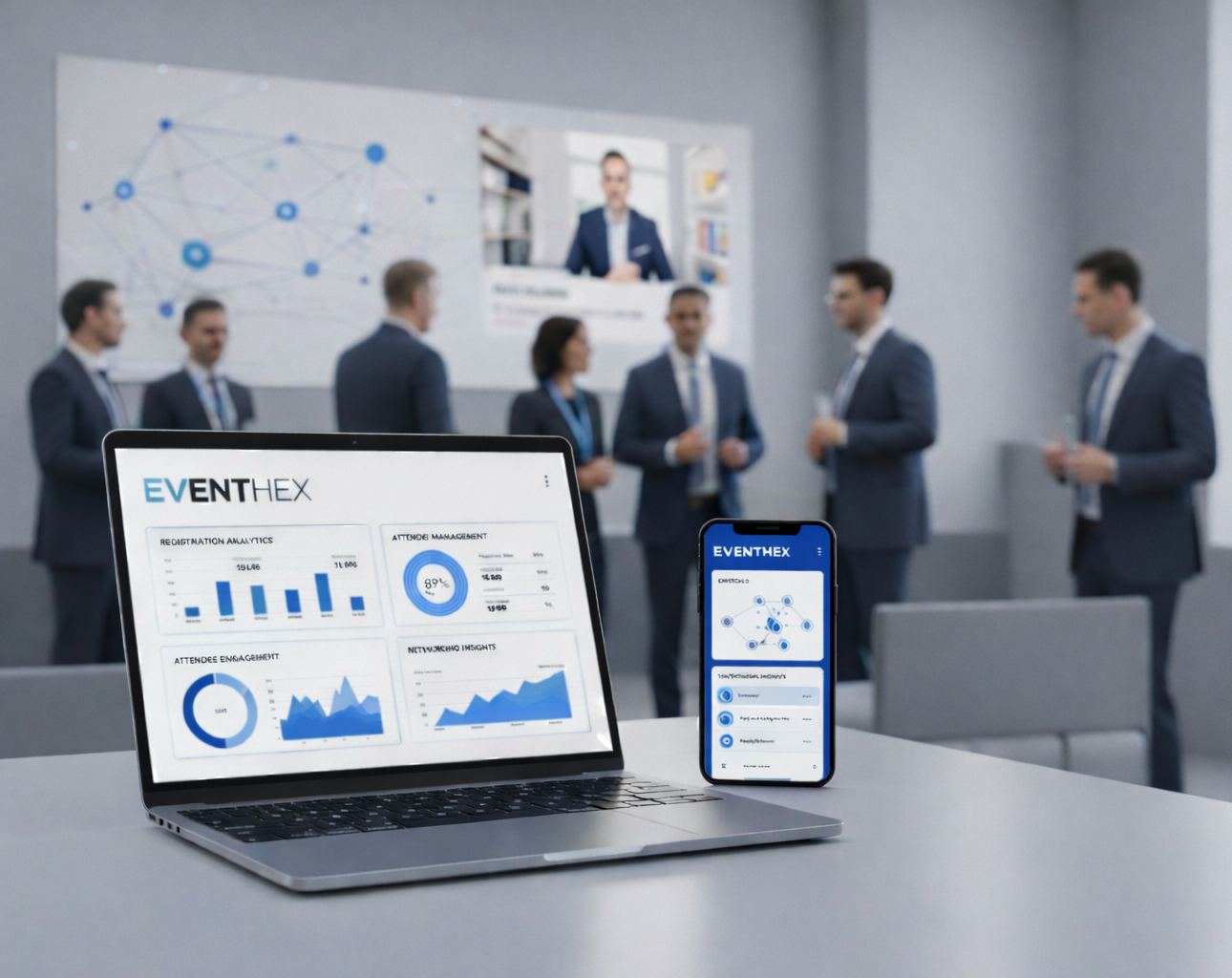
Attendee engagement in today’s fast-moving event industry is no longer a supporting function; it is the backbone of successful strategy, execution, and measurement. From early-stage planning to post-event reporting, digital tools and platforms like EventHex help organizers streamline workflows, reduce operational friction, and deliver richer experiences for participants. What once required dozens of spreadsheets, lengthy email chains, and manual coordination can now be managed through integrated systems that centralize data and automate processes, providing event teams with greater control and visibility across the entire event lifecycle.
Beyond efficiency, event technology enables planners to design smarter, more responsive events that adapt to audience behavior in real time. It empowers teams to make informed decisions, personalize experiences at scale, and measure success with precision. At the heart of this transformation lies attendee engagement, which ensures that participant data, communication, and interactions remain structured throughout the entire event lifecycle.
This blog examines how event technology impacts each stage of the event lifecycle, highlighting essential tools, best practices, and key outcomes that modern event professionals should consider when creating impactful events.

1. Before the Event: Strategic Planning & Setup
Defining Goals & Strategy
Every successful event begins with clearly defined objectives. These goals may include increasing attendance, generating qualified leads, strengthening brand awareness, improving attendee engagement, boosting revenue, or launching new products. Without a strategic foundation, even the most advanced tools can become distractions rather than assets.
Event technology supports early planning by providing access to historical data and predictive insights. Through effective attendee engagement, organizers can analyze past attendance patterns, session popularity, audience demographics, and behavioral trends to guide decisions around timing, pricing, content structure, and promotion. Dashboards and analytics tools help teams visualize progress and align stakeholders before execution begins.
Centralized Event Management Platforms
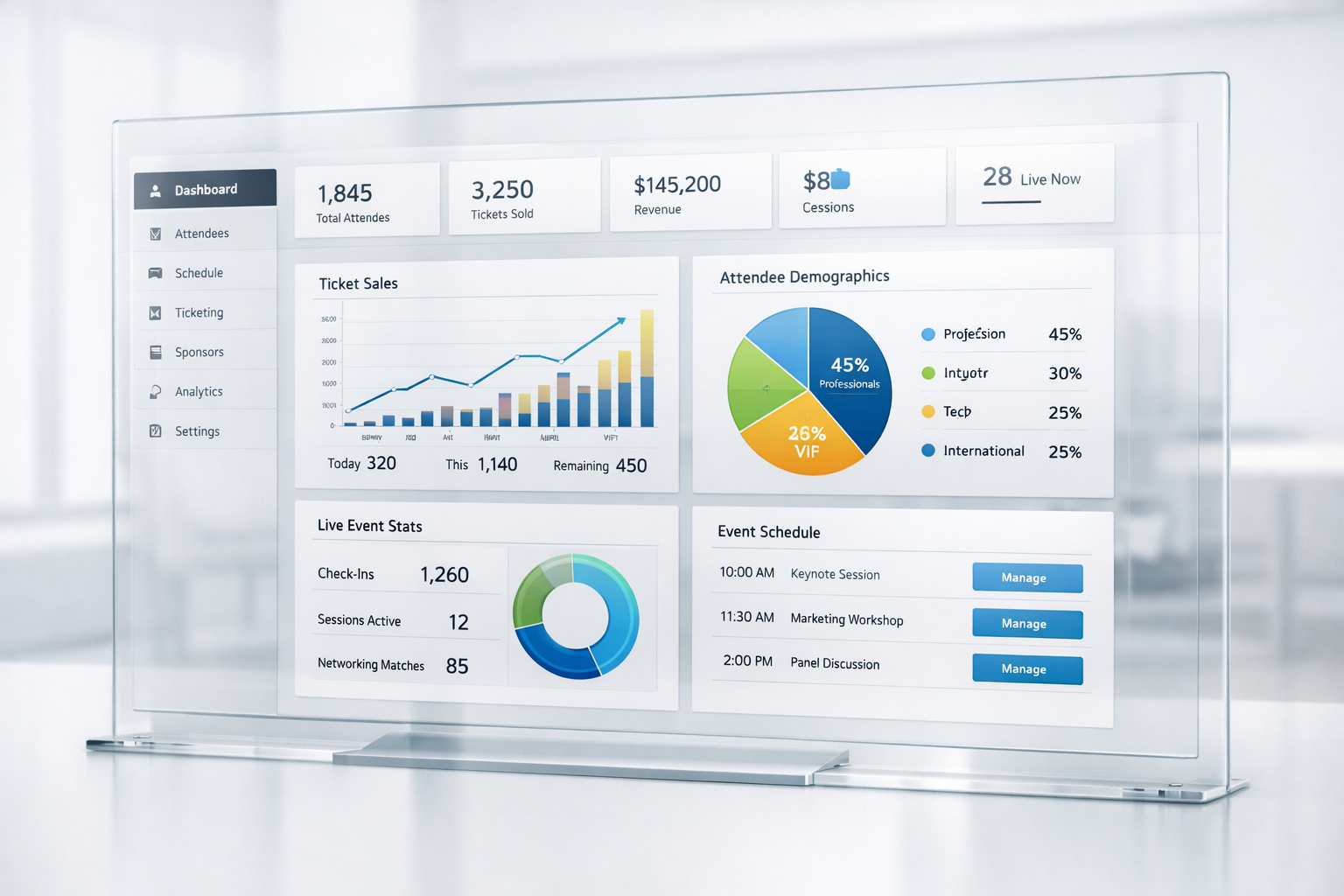
One of the most transformative shifts in event planning has been the move from disconnected tools to centralized event management platforms. Instead of juggling separate systems for registrations, communications, schedules, and reporting, planners now operate from a single dashboard.
These platforms unify attendee data, speaker information, sponsor assets, payments, and logistics. Centralized attendee engagement reduces duplication of effort, minimizes errors, and ensures all stakeholders work from the same source of truth. This consolidation allows teams to focus on strategic decision-making rather than administrative tasks.
Automated Communication Systems
Clear and consistent communication is critical long before the event begins. Automated messaging tools enable organizers to send confirmations, reminders, updates, and personalized content at scale. Emails, SMS messages, and in-app notifications can be triggered based on user behavior.
When paired with structured attendee engagement, automation ensures that communication remains relevant, timely, and aligned with individual attendee profiles. This builds trust, reduces no-shows, and keeps participants informed throughout the pre-event phase.
Smart Scheduling & Resource Coordination
Scheduling has traditionally been one of the most complex aspects of event planning. Coordinating speakers, rooms, equipment, catering, and session flow requires balancing numerous constraints.
Modern scheduling tools use AI and rule-based logic to identify conflicts, suggest optimal time slots, and optimize room usage. Integrated attendee engagementdata allows planners to anticipate session demand and manage capacity more effectively, resulting in smoother agendas and better overall experiences.
2. Registration & Ticketing: Seamless Onboarding
Online Registration Portals
Registration is often the first direct interaction attendees have with an event, making it a critical moment for setting expectations. Modern registration portals are fully customizable, allowing organizers to collect detailed information, offer multiple ticket types, and present add-ons such as workshops or networking sessions.
These portals form the foundation of strong attendee engagement, capturing accurate data that supports segmentation, personalization, and reporting later in the event lifecycle. A frictionless registration experience also reduces drop-offs and improves conversion rates.
Automated Ticketing & Check-In
Digital ticketing has replaced paper passes in most professional events. QR codes, NFC badges, and RFID technology enable fast, contactless check-ins that reduce queues and operational stress at entry points.
Real-time check-in data strengthens attendee engagementby giving organizers immediate visibility into attendance patterns, peak arrival times, and session demand, allowing for quick operational adjustments.
3. During the Event: Engagement & Experience
Mobile Event Apps
Mobile event apps have become the digital center of modern events. They provide attendees with instant access to agendas, speaker bios, session materials, venue maps, and announcements. Push notifications keep participants informed about updates or schedule changes.
These apps also play a vital role in real-time attendee engagement, allowing organizers to monitor participation, send targeted updates, and track interactions from a centralized interface throughout the event.
Interactive Session Tools
Today’s audiences expect to be active participants rather than passive listeners. Interactive session tools such as live polling, Q&A platforms, digital hand-raising, and feedback widgets enable two-way communication between speakers and audiences.
The data generated from these interactions feeds directly into broader event insights, supporting smarter content decisions and improving future programming.
AI-Driven Networking & Matchmaking
Networking is a core reason many people attend events, yet it has historically been difficult to facilitate at scale. AI-driven matchmaking tools analyze attendee profiles, interests, and behavior to recommend meaningful connections.
By leveraging structured attendee engagement, these tools help participants schedule meetings, exchange digital business cards, and build stronger professional relationships, increasing the overall value of the event.
Hybrid & Virtual Capabilities
Hybrid and virtual formats have become a permanent part of the event landscape. Live streaming platforms, virtual stages, and digital expo halls allow events to reach global audiences without geographic limitations.
Remote participants can engage through chat, polls, and networking lounges, ensuring they remain connected to the experience while expanding reach and accessibility.
4. Post-Event: Measurement & Growth
Advanced Analytics & Reporting
One of the greatest advantages of event technology is the ability to measure performance in detail. Post-event dashboards provide insights into session attendance, content popularity, networking activity, and overall participation levels.
With comprehensive attendee engagement, organizers can analyze how different audience segments interacted with the event and identify opportunities for improvement.
CRM Integration & Lead Nurturing
When event platforms integrate with CRM systems, attendee data becomes part of a broader customer journey. Interactions such as session attendance, booth visits, and meetings contribute to lead scoring and segmentation.
Accurate attendee engagement ensures that post-event follow-ups are timely, personalized, and aligned with business objectives, extending the value of the event well beyond its closing session.
Feedback & Continuous Improvement
Surveys remain valuable, but modern technology enables richer feedback collection through in-app behavior tracking, dwell time analysis, and sentiment data. These insights help organizers refine formats, content, and logistics for future events.
5. Broader Benefits of Event Technology
Efficiency & Cost Optimization
Automation and centralized workflows reduce manual tasks and allow lean teams to manage complex events more effectively, resulting in lower costs and fewer errors.
Personalization at Scale
Data-driven insights enable tailored content, recommendations, and communication that increase relevance and satisfaction for attendees.
Sustainability & Inclusivity
Digital materials, virtual attendance options, and optimized logistics supported by modern attendee engagementsystems reduce environmental impact while expanding accessibility.
Conclusion
Event technology has transformed event management from a manual, reactive process into a strategic, data-driven discipline. By integrating smart tools across the event lifecycle from planning and registration to live execution and post-event analysis organizers can deliver more efficient operations, stronger insights, and higher-value experiences.
When used intentionally, technology helps teams enhance attendee engagement and strengthen it, and continuously improve outcomes. As events continue to evolve toward hybrid, personalized, and insight-led formats, technology will remain central to shaping successful, future-ready events.