Introduction
In today’s fast-paced world, events are no longer just gatherings. Whether it’s a tech summit, industry expo, or hybrid conference, each event is an experience, a journey that begins long before the doors open and continues long after the last session ends. Yet despite rapid innovation in event technology, many organizers still struggle with the same old problems: fragmented tools, disjointed data, last-minute chaos, and an inability to make strategic decisions with confidence. These problems aren’t accidental. They are structurally rooted in how events are planned, managed, and measured, and they directly impact attendee engagement.
In this article, we explore why modern events often fail to deliver the impact organizers envision, and how EventHex, a unified event platform, brings centralized intelligence to every stage of the event lifecycle while improving attendee engagement.
The Hidden Costs of Fragmented Event Workflows
Imagine you’re running a mid-size conference. You use:
-
One tool to manage registrations
-
Another for ticketing
-
A spreadsheet for sponsors
-
Email and WhatsApp to coordinate with speakers
-
Manual check-ins at the venue
Sound familiar?
This is exactly how many events still operate. Each tool might do its job well enough, but together they create inefficiencies that are hard to see until it’s too late, and they often weaken attendee engagement.
Lost Time and Manual Work
Every time you switch from one platform to another, work has to be copied, verified, and reconciled. Manual exports. Duplicate data. Endless meetings just to align everyone. This inefficiency takes time and burns precious hours that could have been spent on strategy, content, and attendee engagement.
Broken Data Continuity
Registration data lives in one system, ticketing in another, and sponsorship details in a third. By the time you analyze performance after the event, you’re left piecing together reports like a jigsaw puzzle, and worse, many decisions were made without accurate data in the first place. When data is broken, attendee engagement becomes harder to track and improve.
Stress and Burnout
The emotional toll of managing events using disconnected tools is rarely discussed but deeply real. Organizers juggle deadlines, expectations, and last-minute changes, often reacting to issues instead of planning proactively. This reactive mode leads to burnout, uneven experiences, and lost opportunities to wow attendees and sponsors alike, which ultimately reduces attendee engagement.
What Centralized Intelligence Truly Means
Centralized intelligence isn’t a buzzword. It’s a foundational shift in how events are orchestrated. At its core, centralized intelligence means:
-
All event data lives in one place
-
Tools talk to each other automatically
-
Real-time insights guide decision-making
-
Teams operate with clarity instead of chaos
Systems that simply collect data aren’t enough. To unlock real value, platforms need to connect that data across workflows so organizers can see patterns, predict outcomes, and make strategic adjustments before, during, and after the event, especially for better attendee engagement.
Where Traditional Tools Fall Short
Traditional event systems were designed to solve one problem at a time. A ticketing tool sells tickets. A separate platform handles check-ins. Another manages communications.
This siloed architecture creates these core challenges:
No Shared Context
When registration, attendance, sponsorship, speaker data, and engagement insights are spread across systems, teams lack a shared source of truth. One person might see attendee engagement metrics, but another only sees revenue numbers, and no one has the full picture. Without shared context, decisions are guesses instead of strategies.
Delayed Insights
Many traditional workflows rely on post-event exports, manual reconciliation, and delayed reporting. By the time results are available, opportunities to optimize are gone. Modern events require real-time visibility, not end-of-event summaries, especially when improving attendee engagement is a priority.
Lack of Agility
Event environments are dynamic. Speakers change. Sponsors adjust deliverables. Sessions get cancelled. When tools are disconnected, every change becomes a manual chore. Agility isn’t a feature; it becomes a nightmare, and it negatively affects attendee engagement.
How Intelligent Event Platforms Change the Game
The organizers who succeed today are those who rethink events as systems rather than tasks. They embrace platforms that unify every stage of the event lifecycle under one dashboard, bringing intelligence and automation into workflows to strengthen attendee engagement.
Here’s how this transformation plays out:
Unified Registration and Ticketing
Instead of managing separate tools for sign-ups and payments, intelligent platforms centralize registrations, ticket tracking, and attendee data. Organizers can:
-
See who registered in real time
-
Manage approval workflows
-
Segment attendees by type
-
Track payment status instantly
This isn’t just convenience, it’s strategic clarity. When you see registration patterns early, you can pivot marketing, optimize pricing, and personalize communication before it’s too late, improving attendee engagement from the start.
Real-Time Attendance and Check-In Data
On event day, chaos can feel inevitable. But with centralized platforms, check-ins feed live data to the same system that holds registration, ticketing, and session schedules. Organizers gain:
-
Real-time attendance trends
-
Zone-specific check-in insights
-
Capacity tracking across sessions
-
Alerts on bottlenecks before lines form
This real-time intelligence transforms the event experience from reactive to proactive, ensuring a smoother, more organized flow and higher attendee engagement.
Sponsor and Exhibitor Management that Works
Sponsors are revenue drivers. Yet many platforms treat sponsorship as an afterthought, a separate add-on that lives outside core workflows. This makes sponsor deliverables hard to track and ROI difficult to measure.
Unified platforms bring sponsor management into the same ecosystem:
-
Centralized sponsor profiles
-
Deliverables tracking
-
Engagement analytics
-
Post-event performance data
When sponsors see measurable value, not just logos on a slide, they’re more likely to renew and invest deeper, especially when attendee engagement metrics clearly prove event success.
Smart Speaker and Agenda Coordination
Managing speakers is complex. Profiles, session details, communication, and updates all need alignment. Without centralization, organizers spend countless hours coordinating each update manually.
With a unified platform:
-
All speaker and session info stays in one place
-
Updates sync automatically across schedules, apps, and agendas
-
Communication with speakers is transparent and tracked
-
Attendee preferences inform session promotion
This level of orchestration improves not only organizer efficiency but attendee satisfaction and attendee engagement, too.
Personalized Attendee Engagement
Modern attendees expect personalized experiences. They want relevant recommendations, targeted networking opportunities, and meaningful content suggestions. Strong attendee engagement is what makes an event feel memorable instead of generic.
Intelligent platforms analyze attendee behavior and preferences to:
-
Recommend sessions
-
Suggest networking matches
-
Tailor content delivery
-
Personalize notifications
This level of attendee engagement deepens satisfaction and boosts retention, the number one KPI for recurring events.
Data as a Strategic Asset
Centralized event intelligence turns data from a byproduct into a strategic asset:
-
Registration trends inform marketing strategies
-
Attendance patterns guide schedule optimization
-
Engagement metrics fuel sponsor reporting
-
Post-event behavior shapes future planning
Instead of manual exports and backward-looking reports, organizers get forward-looking insights that drive real outcomes and measurable attendee engagement.
EventHex: A Case for Centralized Event Intelligence
Platforms like EventHex are built for exactly this approach, where every piece of information connects, feeds insights, and supports smarter decisions. Instead of treating features as isolated tools, EventHex integrates registration, ticketing, attendance, speaker coordination, sponsor management, attendee engagement, and analytics into one intelligent system.
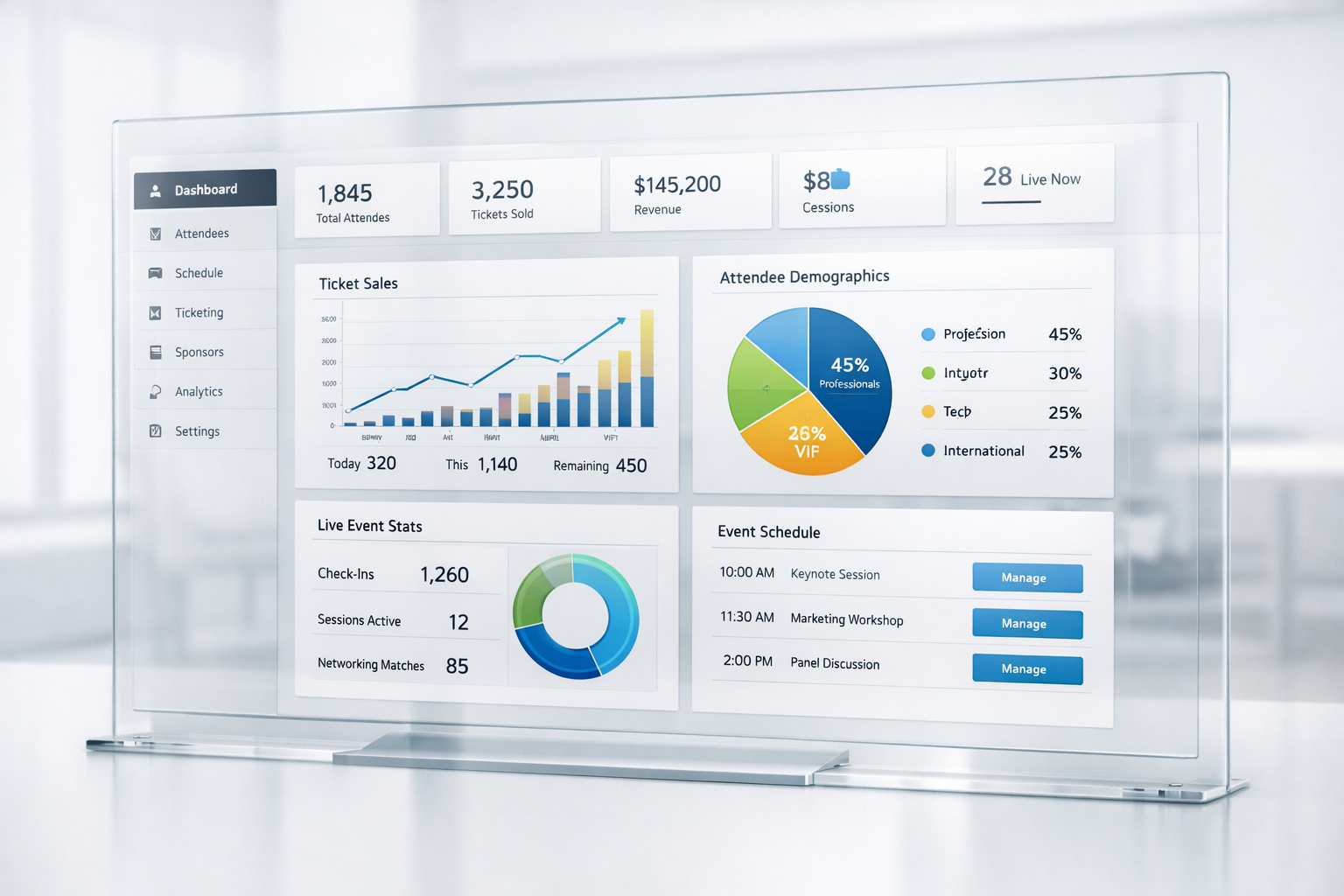
One Dashboard, Total Visibility
With a centralized dashboard, teams work from a single source of truth. This means fewer meetings just to sync information, fewer manual reconciliations, and more time for strategy, experience design, and attendee engagement planning.
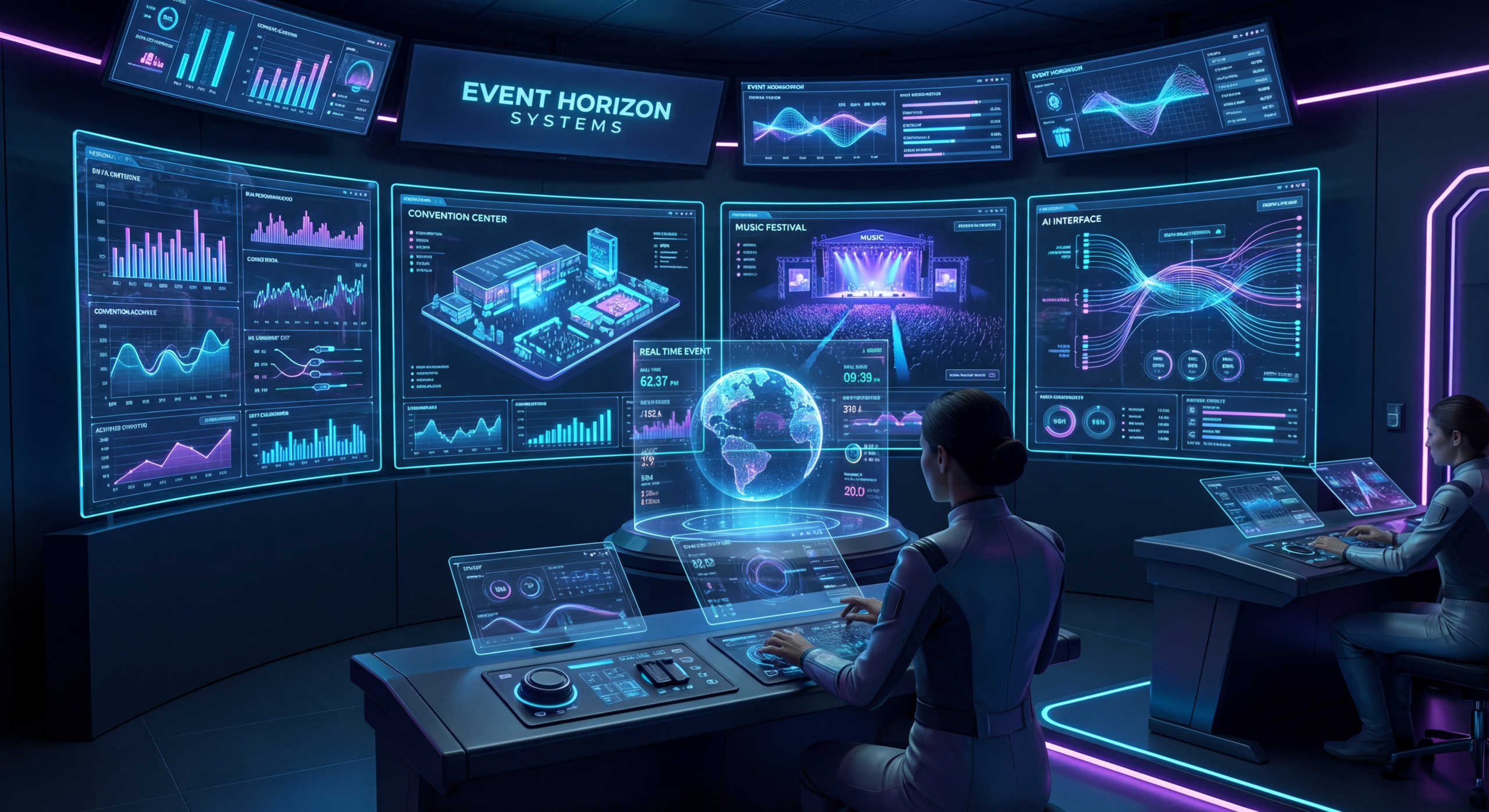
Real-Time Event Intelligence
Organizers can see how registrations are trending, which sessions are attracting interest, and how attendees are engaging live. This allows for on-the-fly adjustments that can dramatically improve outcomes and boost attendee engagement in real time.
Automation that Reduces Workload
Automated workflow from registration approvals to attendee communication reduces routine tasks so teams can focus on creativity and experience design rather than manual operations. This creates smoother event delivery and stronger attendee engagement across the entire journey.
Actionable Analytics
Instead of spreadsheets full of raw data, EventHex delivers actionable insights that inform decisions across event marketing, engagement, and performance measurement. Organizers know not just what happened, but why it happened and what to do next, including how to improve attendee engagement for future editions.
When Centralization Becomes a Competitive Edge
There’s a reason leading organizers are shifting toward unified platforms: centralized event intelligence is no longer optional, it’s strategic. Events that are managed without connected data and workflows tend to:
-
Miss trends in early registration
-
Fail to address on-site bottlenecks
-
Provide inconsistent attendee experiences
-
Struggle to demonstrate value to sponsors
-
Burn out their own teams
-
Lose opportunities to strengthen attendee engagement
By contrast, events powered by intelligent, centralized platforms deliver smoother operations, deeper attendee engagement, better insights, and measurable ROI.
Conclusion: The Future of Event Planning is Connected
Events are no longer isolated moments in time. They are experiences that span multiple stages, touchpoints, and expectations. The complexity of modern events demands tools that unify workflows, centralize intelligence, and empower organizers to think strategically rather than reactively, while strengthening attendee engagement.
When tools are disconnected, teams struggle. When intelligence is centralized, events thrive.
This is the future of event management, and it’s already here.
If you’re serious about creating memorable events, boosting attendee engagement, and measuring success with clarity, it’s time to rethink the technology you depend on. Centralized intelligence isn’t just a feature; it’s the foundation of modern event success.